|
Articles
about Turbine Flowmeters
Did
you know that there are ten different types of turbine flowmeters? Flow
Research has published a new study on the worldwide turbine flowmeter
market called The World Market for Turbine Flowmeters, 3rd
Edition. Check it out!
The
World Market for Turbine Flowmeters, 3rd Edition has
determined the size of the turbine flowmeter market in 2019 and 2020.and
forecast the market through 2024. It examines where growth is and is not
occurring in terms of application, industry and geography -- and why. It
identifies features end-users are looking for, new developments in turbine
flowmeter technology, and the impact of new-technology flowmeters on
turbine flowmeter sales.
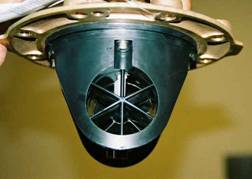 One
main purpose of the study was to find out the dollars and units for each
of the ten types of turbine meters, both worldwide and by region. We also
wanted to determine the effects of the pandemic on the turbine flowmeter
market in 2020 and 2021. Forecasts through 2024 are included. One
main purpose of the study was to find out the dollars and units for each
of the ten types of turbine meters, both worldwide and by region. We also
wanted to determine the effects of the pandemic on the turbine flowmeter
market in 2020 and 2021. Forecasts through 2024 are included.
Our
study finds that the turbine flowmeter market is alive and well. Although
Coriolis, ultrasonic, and magnetic meters have expanded substantially, the
turbine meter market has expanded modestly since 2012, when we published
our last turbine study. The installed base has remained large enough to
encourage substantial development, and suppliers’ technology
improvements made turbine meters more reliable and effective.
 Turbine
flowmeters have remained and will continue to be a viable and popular
choice for a variety of applications -- despite intense competition from
ultrasonic, multiphase, and other new-technology flowmeters, Turbine
flowmeters excel at measuring clean, steady, medium to high-speed flow of
low-viscosity fluids. They offer simplicity, effective turndown ratios,
and the capability of customized solutions for various applications. Turbine
flowmeters have remained and will continue to be a viable and popular
choice for a variety of applications -- despite intense competition from
ultrasonic, multiphase, and other new-technology flowmeters, Turbine
flowmeters excel at measuring clean, steady, medium to high-speed flow of
low-viscosity fluids. They offer simplicity, effective turndown ratios,
and the capability of customized solutions for various applications.
Turbine
meters have a significant cost advantage over ultrasonic and Coriolis
meters, especially in larger pipe sizes, although suppliers report
increasing difficulty competing with ultrasonic and magnetic flowmeters in
large line sizes. The price of turbine meters may also compare favorably
to differential pressure (DP) flowmeters, especially in cases where one
turbine meter can replace several DP meters.
Their
large installed base is also an advantage. Users who are already familiar
with turbine technology and don’t want to spend the extra money required
to invest in a new technology are likely to stay with turbine meters.
Did
you know? Turbine flowmeters are mainly used to measure the flow of fluids
in the following four segments
*
Municipal and industrial water
* Municipal and industrial gas
* Petroleum liquids
* Industrial liquids
Now
is the time
Our
new edition covers all major turbine flowmeter types: axial, single jet,
multi-jet, paddlewheel, Pelton wheel, propeller, Woltman, helical,
compound, and fire service. (For a more detailed discussion of the
types please visit www.turbineflow.com.)
The
World Market for Turbine Flowmeters, 3rd Edition achieves
these goals:
- Determines
the worldwide and regional market shares by turbine flowmeter type
- Forecasts
market growth through 2024 for all of the significant technology types
used in this market
- Provides
product shipment data by distribution channel and customer type
- Determines
market shares for the leading suppliers of the turbine flowmeter
market
- Determines
average selling prices for turbine flowmeters by region and meter type
- Identifies
the process industries where turbine flowmeters are used, focusing
especially on high growth areas
- Identifies
market growth sectors
- Analyzes
products from the main companies selling into the turbine flowmeter
market
- Offers
strategies to manufacturers who sell into the turbine flowmeter market
- Profiles
the main turbine flowmeter suppliers
The
ten types of turbine flowmeters
·
· Axial
- the most common type of turbine meter; has a rotor that revolves around
the axis of flow.
·
· Single
and Multi-Jet - single and multi-jet meters have one or more orifices that
direct a stream or “jet” of water onto a set of blades, causing them
to turn. Single jet meters have only one orifice, while multi-jet meters
have multiple orifices that create streams of water.
·
· Paddlewheel
- used for measurement of low-speed flows and are similar to a water
wheel. A lightweight wheel with flat blades rotates parallel to the
direction of flow and spins in proportion to flowrate.
·
· Pelton
Wheel - work somewhat like paddlewheel meters but have a single sized
rotor with straight blades. Pelton wheel meters are used mainly to measure
low viscosity fluids at low flowrates.
·
· Propeller
- are bulk meters used mainly to handle dirty liquids. They typically have
only a few blades and a rotor that is suspended in the flowstream.
·
· Woltman
- also called “bulk” meters, they are used for larger volume water
applications. They are quite accurate and have a rotor whose axis is in
line with the direction of flow.
·
· Helical
- incorporate two helical-shaped blades that are wider or longer
than the most other turbine meter blades. They are used to measure the
flow of high viscosity oils and other liquids.
·
· Compound
- a hybrid meter, incorporating both turbine and positive displacement.
They are designed to handle both high and low flowrates.
·
· Fire
Service - are used in commercial buildings to handle very high flowrates
on occasion, such as using water from a hydrant to fight a fire. Many fire
service meters incorporate turbine technology.
For
more information on the turbine flowmeter market, including market size,
market shares, and company profiles, see our new study The
World Market for Turbine Flowmeters, 3rd Edition. Click
on the link above to read the Overview.
Growth
factors
Five
significant factors are contributing to growth in the worldwide
turbine flowmeter market:
 Turbine
flowmeters are used for both liquid fuel and gas measurement. Turbine
meters have been used for fuel measurement since the early 1940s, and some
of the development at that time was due to the need to find a reliable way
to measure fuel use on military planes used in World War II. Soon
afterward, turbine meters began to be used in the petroleum industry to
measure the flow of hydrocarbons. Turbine
flowmeters are used for both liquid fuel and gas measurement. Turbine
meters have been used for fuel measurement since the early 1940s, and some
of the development at that time was due to the need to find a reliable way
to measure fuel use on military planes used in World War II. Soon
afterward, turbine meters began to be used in the petroleum industry to
measure the flow of hydrocarbons.
The
history of using turbine meters to measure gas flow goes back to 1953.
Since 1981, however, when the American Gas Association (AGA) published its
first report on measuring fuel gas with turbine meters, the meters have
been solidly established in the gas industry as a measurement device,
especially for custody transfer applications.
Turbine
meters receive industry approvals. Turbine
meters are specified by approval bodies -- including the American Water
Works Association (AWWA), the AGA, and the International Standards
Organization (ISO) in Europe -- for use in custody transfer for utility
measurement in residential, commercial, and industrial applications. These
approvals have been in place for many years.
The
AGA approval of a standard for using turbine flowmeters for
custody transfer of natural gas has been a significant factor in the use
of turbine meters for gas applications. However, now turbine meters face
competition from ultrasonic meters and Coriolis flowmeters, as well as
from differential pressure flowmeters, which are also widely used for
natural gas flow measurement.
Installed
base gives turbine meters an edge. One
major growth factor for turbine flowmeters is the large installed
worldwide base of turbine flowmeters. When companies consider switching
from one flowmeter technology to another, there is more than just the
purchase price to consider, and users often tend to replace like with
like. The investment is more than just the cost of the meter itself -- it
also includes the time and money invested in training people how to
install and use the meter. In addition, some companies stock spare parts
or even spare meters for replacement purposes. The large installed base of
turbine flowmeters worldwide will continue to be a source of orders for
new meters in the future.
Turbine
flowmeters remain a viable choice for steady, medium to high-speed flows. Even
though turbine flowmeters are losing ground to new-technology flowmeters
in some market segments, they still remain a viable choice for steady,
medium to high-speed flows. Turbine meters, which compute flow based on a
velocity measurement, excel at measuring clean, steady, medium to
high-speed flow of low-viscosity fluids. They will continue to maintain
their wide usage for gas flow applications due to a significant cost
advantage over ultrasonic meters, especially in the larger pipe sizes --
and their price may also compare favorably to DP flowmeters, especially in
cases where one turbine meter can replace several DP meters.
Suppliers
are developing better performing turbine meters. Turbine
meter suppliers are making technology improvements to make turbine meters
more reliable, especially their moving parts. By making the ball bearings
out of more durable material, such as ceramic, turbine suppliers have been
able to add significantly to the life of the bearings. This is important,
since some customers select new-technology meters over turbine meters
because turbine meters have moving parts.
One supplier has introduced a dual rotor turbine flowmeter that extends
the flow range of turbine meters and provides higher measurement accuracy.
Dual rotor meters also reduce the effects of swirl on flow measurement.
Another supplier has developed a turbine meter that offers bidirectional
flow.
These
types of innovations are giving end-users another reason to consider
turbine flowmeters as an option, or to stay with them if they are already
using using them. .
Another
development under research involves a new sensor design that will
potentially reduce the pressure drop involved in turbine flow measurement.
It may also provide enhanced accuracy and reduced susceptibility to the
presence of particles in the flowstream. While this design is still in the
development phase, it has the potential to have a significant impact on
the turbine flowmeter market over time.
Please contact us today to learn more about this important study!
Previous
studies
The
World Market for Turbine Flowmeters,
2nd
edition -- Released in
2012
The
World Market for Turbine Flowmeters -
Released in 2002
Also see: www.TurbineFlow.com
|